

Search Engine Optimization (SEO) helps law firms appear when people search for legal help. In Pakistan, a focused strategy can attract relevant enquiries, support referrals, and build visibility. Karachi SEO Services helps businesses improve search visibility through useful content and local optimization.
What Is SEO in Pakistan for Law Firms?
SEO for law firms improves a legal website and its online presence so search engines can connect the firm with relevant searches. The work includes keyword research, service pages, technical optimization, local listings, accurate legal content, and relevant links.
Legal searches require care because inaccurate information can affect rights, finances, or freedom. Identify your firm, name its advocates, explain qualifications, and provide verifiable contact details. SEO does not guarantee rankings or cases; it helps suitable clients discover relevant services.
Why SEO for Law Firms Works So Well in Pakistan
People often search online before contacting an advocate, even after receiving a referral. They may look up an advocate’s name, confirm a chamber’s location, compare practice areas, or research a legal process. If your website offers little information, a potential client may choose a firm with a clearer online presence.
SEO can help you:
- Reach high-intent clients: “Family lawyer in Karachi” signals a search for legal services.
- Answer early questions: Content about khula, inheritance, property transfers, or tax notices can introduce your expertise.
- Support referrals: Profiles and accurate contact details help referred clients verify credentials.
- Build ongoing visibility: Useful pages can attract organic visits over time, although results depend on competition.
- Complement paid advertising: Organic search can reduce reliance on paid promotion without replacing every other channel.
What Do Potential Clients Search For?
A useful SEO plan accounts for four search types.
Problem-first searches: People ask “how to transfer property in Pakistan,” “khula procedure in Pakistan,” or “what to do after receiving an FBR notice.” Procedural content can reach people before they know which legal service they need.
Practice-area searches: “Property lawyer in Lahore,” “divorce advocate in Karachi,” “criminal lawyer in Islamabad,” and “corporate lawyer in Rawalpindi” show stronger commercial intent. Create relevant pages for services you actually provide.
Named searches: People referred to an advocate often search the advocate’s name. A profile helps them confirm qualifications, courts of practice, specialisation, and contact options.
Process and cost searches: People want to know which documents a matter requires, how long a process may take, and how fees are structured. Clear answers can build confidence before consultation.
Keyword research should reflect Pakistani terminology and the questions clients ask. Roman Urdu and Urdu searches can matter for family, inheritance, and property matters. Use familiar language without sacrificing legal accuracy.
Build Advocate Profiles and Practice-Area Pages
Individual advocate profiles establish identity and support the credibility of your website’s legal content. Each profile should include the advocate’s full name, qualifications, relevant Bar Council enrolment details, courts of practice, specialisation, years in practice, languages, professional memberships, photograph, and contact route.
Attribute articles to a named advocate who has reviewed the content.
Create a separate practice-area page for each service your firm genuinely handles. A family-law page should explain the relevant Pakistani legal context, common stages, likely documents, realistic timeframes, fee factors, and what a client should prepare. A property-law page should address procedures and documentation relevant to the matters your firm accepts.
Avoid generic pages copied from overseas legal websites. Pakistani statutes, court procedures, terminology, and provincial requirements can differ from other jurisdictions. Do not create pages for services you cannot provide; irrelevant enquiries waste time and weaken the clarity of your website.
Publish Useful, Accurate Legal Content
Legal content should answer a real question directly and give readers practical next steps. Useful topics include:
- Steps involved in a specific legal procedure.
- Documents commonly required for a matter.
- Realistic timeframes and reasons delays may occur.
- How legal fees are generally calculated.
- What to do after receiving a particular notice.
- Common mistakes before consulting an advocate.
- Which court or forum may handle a matter.
Identify provincial differences where relevant. Procedures or applicable rules may vary across Punjab, Sindh, Khyber Pakhtunkhwa, Balochistan, and Islamabad. State the scope of each article rather than implying one explanation applies to every case.
Make clear that articles provide general information, not legal advice, and that circumstances differ by case. Encourage readers to consult an advocate about their situation. Arrange legal review before publication and revisit pages when relevant laws or procedures change.
Improve Local SEO and Google Maps Visibility
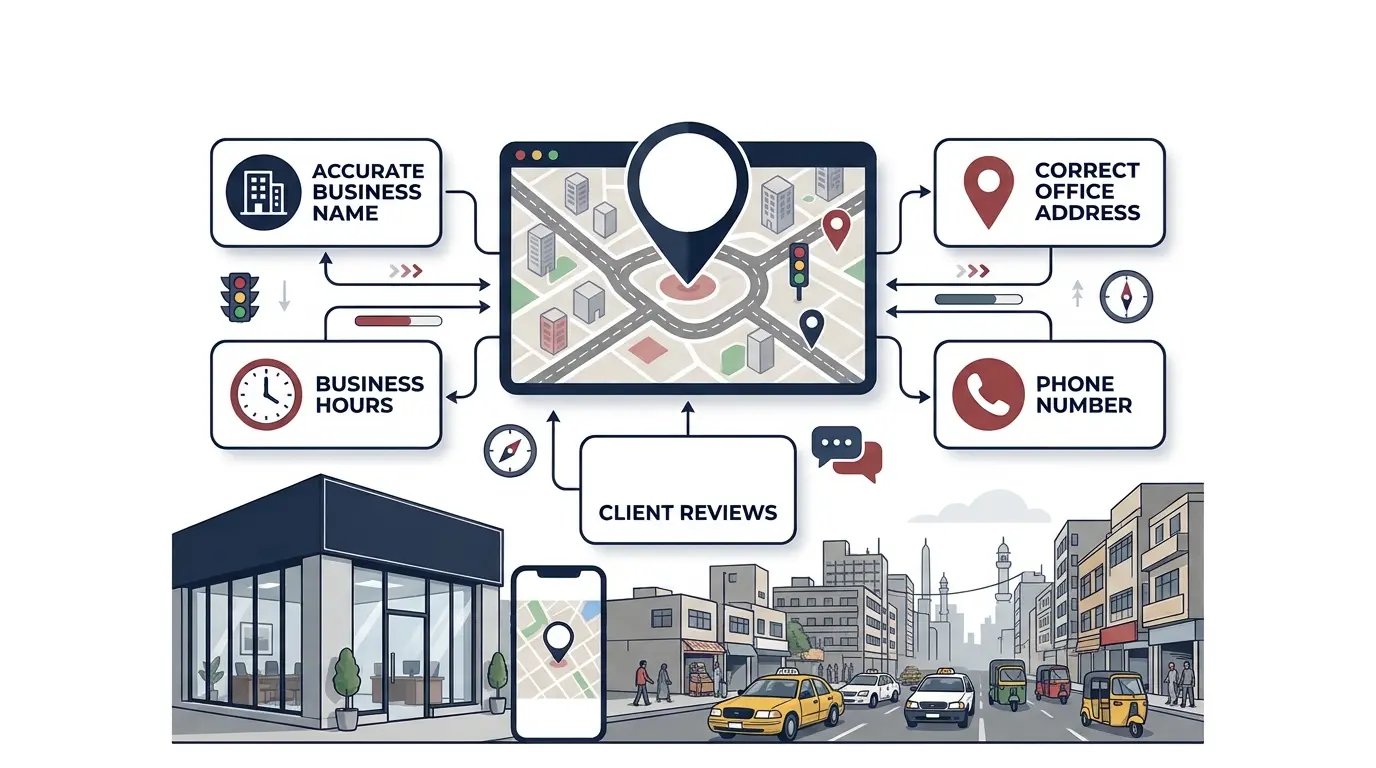
Local SEO helps your firm appear for searches tied to a city, neighbourhood, or nearby location. This matters for clients who want a chamber they can reach, especially around court complexes.
Complete your Google Business Profile with an accurate eligible category, address or service-area details, phone number, website, hours, and service information. Keep the map pin correct and make sure contact details match your website and other directories. Follow this guide to add business in google maps.
Use location terms naturally and describe actual coverage. A focused local SEO services strategy can align pages and listings.
Request honest reviews through an appropriate process, but do not offer incentives or disclose confidential information in public replies. Never confirm that a reviewer was a client or reveal case details. For a negative review, acknowledge the concern briefly and invite a private discussion.
Strengthen Trust and Website Performance
A law firm website needs clear ownership, reliable information, and a smooth user experience. Display contact details, advocate biographies, qualifications, privacy information, and secure HTTPS access. Use a professional design and make the next step clear on important service pages.
Technical SEO helps search engines understand your site. Ensure important pages can be indexed, internal links work, duplicate URLs do not cause confusion, and titles accurately describe content. Use structured data only when accurate.
Test mobile speed, text, menus, forms, and tap-to-call links. Fix broken elements that block contact.
Relevant links from reputable legal directories, associations, local organisations, or publications can support authority. Prioritise quality over quantity. Track calls, forms, consultations, and organic traffic.
What ROI Can Law Firms Expect From SEO?
Return on investment (ROI) depends on your practice areas, competition, website condition, content quality, and ability to convert enquiries into clients. SEO does not produce a guaranteed number of cases. Some improvements may appear within months, while competitive searches can require sustained work.
Measure qualified enquiries, which pages generate them, and how many become consultations or clients.
Organic visibility can attract visitors without a charge for every click. Treat SEO as one client-acquisition channel alongside referrals.
Common Law Firm SEO Mistakes to Avoid
Avoid these errors:
- Keyword stuffing: Repeating “best lawyer” or city names makes content unnatural and does not prove expertise.
- One general services page: Different practice areas need focused information.
- Unverified claims: Do not guarantee outcomes, publish unsupported success rates, or claim to be the “best” without independent evidence.
- Confidential case details: Do not publish identifying information without documented consent and careful consideration of professional duties.
- Copied content: Reusing another firm’s articles undermines originality and can mislead readers.
- Poor local information: Incorrect hours, inconsistent contact details, or a wrong map pin frustrate potential clients.
- Expecting instant results: SEO requires measurement, updates, and continued work.
Check current applicable Bar Council guidance before publishing promotional material. Professional obligations take priority over competitors’ marketing practices.
How to Choose the Right SEO Agency for Your Law Firm
Choose an agency that understands legal search intent, local SEO, technical optimization, and professional discretion. Ask how it protects confidentiality, measures qualified enquiries, and reports progress. Avoid guaranteed-ranking promises; request a clear scope, realistic milestones, and measurable goals.
If you need professional support, consider an experienced SEO agency in Karachi that explains its strategy clearly and aligns work with your actual services and ethical responsibilities.
How to Get Started
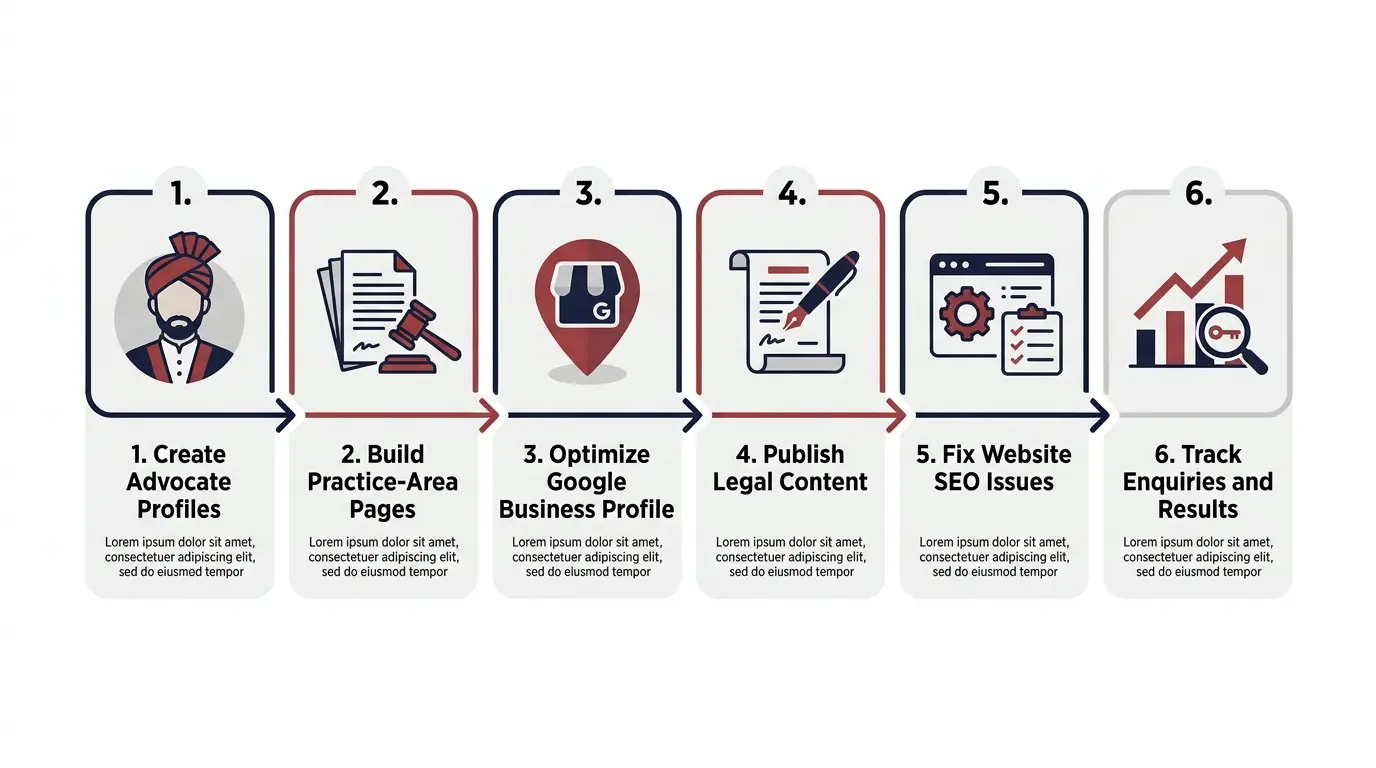
Start with the foundations: publish complete advocate profiles, correct your Google Business Profile, build accurate pages for genuine practice areas, and answer common procedural questions. Then review technical issues, strengthen relevant local references, and measure which pages bring suitable enquiries.
This helps search engines understand your services and gives potential clients reasons to contact your firm.
Frequently Asked Questions
Does SEO work for law firms?
Yes, SEO can help law firms attract relevant enquiries by making service pages, advocate profiles, and helpful legal articles easier to find. Results depend on competition, credibility, website quality, and consistent work. SEO supports referrals and other marketing channels; it does not guarantee clients or case outcomes.
Which SEO company is best for law firms?
The right SEO company understands legal content, local search, technical SEO, and professional obligations. Compare providers by their process, reporting, transparency, and approach to confidentiality. Avoid agencies that promise guaranteed rankings or clients, and choose a team that aligns its work with your firm’s real services.
What is the typical cost of SEO for a law firm?
SEO costs vary with competition, website condition, target locations, and the work required. A quote may cover technical fixes, content, local optimization, reporting, or authority building. Request a written scope and measurable goals, then assess qualified enquiries and business value instead of judging cost by rankings alone.
Why is SEO important for law firms?
SEO helps potential clients find and assess your legal services when they search online. Accurate advocate profiles, focused practice pages, local visibility, and useful procedural content can build trust and attract relevant enquiries. SEO also helps referred clients verify your credentials before they contact your firm.