Are SEO Services Worth It?
If you’ve ever gotten a cold email promising “page one rankings in 30 days,” you’ve probably asked yourself: are SEO services worth it, or is this just another marketing expense that drains your budget without results? It’s a fair question, especially for small business owners watching every dollar.
The short answer is yes, but with conditions. SEO can be one of the most reliable channels for sustainable traffic when it’s done correctly, but not every SEO provider delivers equal results. Below, we’ll break down what SEO services actually include, the real ROI, how long results take, the risks worth knowing about, and how to tell a good agency from a bad one.
What Do SEO Services Actually Include?
“SEO” gets used as a catch-all term, but a proper SEO service is really a bundle of distinct disciplines working together:
- Keyword research: Identifying the exact terms your potential customers are typing into Google.
- On-page optimization: Refining titles, headings, meta descriptions, and content structure for both readers and search engines.
- Technical SEO: Fixing site speed, mobile usability, crawlability, and indexing issues that hold rankings back.
- Content strategy: Producing pages and posts that actually answer what searchers are looking for.
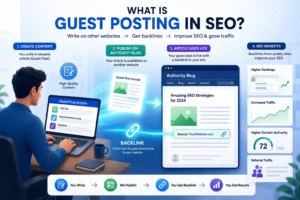
- Link building: Earning backlinks from credible sites to build authority.
- Local SEO: Optimizing for “near me” searches and map listings, critical for businesses with a physical location.
Agencies that only do one or two of these (say, just content, with no technical work) tend to plateau quickly. The strongest results come from providers who treat SEO as a connected system rather than a checklist.
What Is the Average ROI of SEO Services?
SEO tends to outperform most other marketing channels over time because organic traffic doesn’t disappear the moment you stop paying for an ad. Estimates vary by source and industry, but most recent studies agree that organic search drives somewhere close to half of all website traffic, making it one of the largest single sources of visitors for most businesses.
The catch is that ROI compounds. A campaign that looks unimpressive in month two can look very different by month eight, because rankings and backlinks accumulate rather than reset. This is one reason agencies offering structured national SEO services often ask clients to commit to at least six months before judging results.
Is Organic SEO Dead?
You’ll see this claim resurface every time Google rolls out a major algorithm update or AI search feature. It isn’t true. What has changed is the bar for what counts as “good” SEO. Thin content and keyword-stuffed pages no longer cut it, but well-researched, genuinely useful pages still rank.
If anything, the gap between businesses that invest in quality SEO and those that don’t has widened. Search engines have gotten better at filtering out low-effort content, which means properly optimized sites face less competition from spam, not more.
How Long Does It Take for SEO to Work?
This is the question that trips up most business owners. Realistically:
- 0–3 months: Technical fixes, on-page optimization, and content groundwork. Little visible movement yet.
- 3–6 months: Early ranking improvements for less competitive keywords.
- 6–12 months: Noticeable traffic growth and rankings for primary target terms.
Most industry timelines land somewhere in this same window, with measurable improvement typically showing up between three and twelve months depending on competition. If an agency promises overnight results, that’s a red flag rather than a selling point.
SEO Benefits for Small Business
For a small business, SEO often delivers value beyond just traffic:
- Local visibility: Showing up when nearby customers search for your service, especially through tools like local SEO citations and an optimized Google Business Profile listing.
- Lower customer acquisition cost over time: Once you rank, each visitor effectively costs less than one from paid ads.
- Credibility and trust: Ranking organically signals legitimacy to customers who actively skip past paid ads.
- Better overall website experience: Good SEO forces improvements to site speed and mobile usability, which also boosts conversions, not just rankings.
- Competitive standing: If competitors in your space are investing in SEO and you’re not, they’ll capture the visibility and leads that should be going to you.
A solid local SEO service is often the most cost-effective starting point for small businesses competing in a specific city or region.
SEO vs PPC ROI: Which Wins?
This isn’t really an either-or decision, but the two behave very differently:
- PPC delivers traffic immediately, but that traffic stops the moment you stop paying.
- SEO takes longer to build, but the traffic keeps coming without an ongoing per-click cost.
Many businesses find the strongest ROI comes from running PPC for immediate leads while SEO builds in the background, then gradually shifting budget toward organic as rankings improve. Comparing the two in isolation misses how well they complement each other.
Is It Worth Hiring an SEO Agency for Small Business?
For most small businesses without in-house marketing expertise, hiring an agency is worth it, provided the agency is transparent about strategy and timelines. The alternative, learning SEO through trial and error, often costs more in wasted time than the agency fee would have.
That said, not every agency is a good fit for every business. A company selling internationally needs different expertise than a local shop, which is why services range from e-commerce SEO and Shopify SEO to international SEO depending on the business model.
When SEO Is Worth the Investment
SEO tends to make sense when:
- Your industry has genuine search demand for what you offer.
- You’re aiming for sustainable, long-term growth rather than a quick spike.
- You already publish or plan to publish content regularly, since SEO amplifies content rather than replacing it.
- You’re willing to wait several months before expecting major results.
When SEO Might Not Be Worth It (Yet)
SEO isn’t always the right first move. It may not be worth it if:
- You need leads immediately and can’t wait three to six months for traction; PPC is usually a faster bridge.
- Your budget is so limited that you can only afford low-quality, templated work, which tends to underperform and waste the spend entirely.
- You operate in an extremely small niche with little to no search volume for relevant terms.
Signs a Professional SEO Service Is Worth the Money
Look for these signals before signing a contract:
- They explain their process clearly instead of using vague terms like “secret techniques.”
- They set realistic timelines rather than promising fast rankings.
- They report on metrics that matter, such as rankings, traffic, and conversions, not just vanity numbers like “keywords tracked.”
- They ask about your business goals first, not just your budget.
- They stick to ethical, white-hat practices and stay current on algorithm changes rather than chasing shortcuts.
If you want a deeper look at what separates good providers from mediocre ones, this breakdown of how SEO helps your business covers the foundational value an agency should be delivering.
The Risks of Hiring the Wrong SEO Provider
Not every SEO service is created equal, and some of the risk is on you to screen for it before signing anything.
- Algorithm volatility: Google updates its ranking systems regularly, and a provider who isn’t actively monitoring those changes can let your rankings quietly slide. Ask how they stay current and how they respond when an update hits.
- Black hat tactics: Some providers still rely on shortcuts like keyword stuffing, link farms, or cloaking to fake quick wins. These can trigger manual or algorithmic penalties that take months to undo, sometimes longer than if you’d done nothing at all. Always confirm a provider follows Google’s published webmaster guidelines.
- Locked-in contracts with no transparency: If an agency won’t show you what work is actually being done each month, that’s a warning sign regardless of the price.
How Much Should You Pay for Monthly SEO Services?
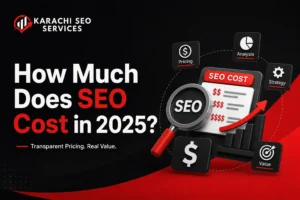
Pricing varies widely based on competition, location, and scope, but most small-to-midsize businesses can expect monthly retainers to fall into a moderate range rather than the extremes on either end. A detailed look at what actually SEO costs breaks down pricing by service type, which is worth reviewing before comparing quotes.
As a rule of thumb, prices far below market average usually mean outsourced, templated work, while prices far above average should come with a clear justification, such as dedicated strategists, custom content, or advanced technical work.
The Bottom Line
So, are SEO services worth it? For most businesses, yes, but only when paired with realistic expectations, a transparent agency, and enough patience to let the strategy compound over several months. SEO isn’t a quick fix, but it’s one of the few marketing investments that keeps paying off long after the initial work is done.
If you’re ready to explore what a tailored strategy could look like for your business, take a look at our Local SEO services or reach out to discuss your specific goals.
Table of Contents
Need SEO That Works?
Share This Artical:

Mazher Noor Muhammad
Generated over $100K+ Revenue & 5.7K+ Leads a month for my clients through SEO | Help Startups || Brands || Enterprise Companies to get rank on Google Search Engine | CEO & Founder of Digiown Agency