Search engines have evolved beyond matching exact keywords with webpages. Today, Google tries to understand the meaning, context, and relationships behind a search.
This is where entities in SEO become important.
An entity can be a person, brand, product, place, organization, event, or concept. Understanding these entities helps search engines determine what your content is about and how it relates to what users are searching for.
What Is an Entity in SEO?
An entity is a unique, well-defined, and distinguishable thing or concept.
Examples include:
- Pakistan
- Apple
- Eiffel Tower
- SEO
- Cristiano Ronaldo
An entity is more than a word on a page. It represents something that search engines can identify and understand.
For example, Apple could mean the fruit or Apple Inc. Search engines use context and relationships to determine which entity you mean.
How Do Search Engines Understand Entities?
Search engines use machine learning, natural language processing, and large knowledge bases to understand entities.
One of the most important systems is Google’s Knowledge Graph, which connects entities with their attributes and relationships.
For example:
Apple → Company → Technology → iPhone → Smartphone
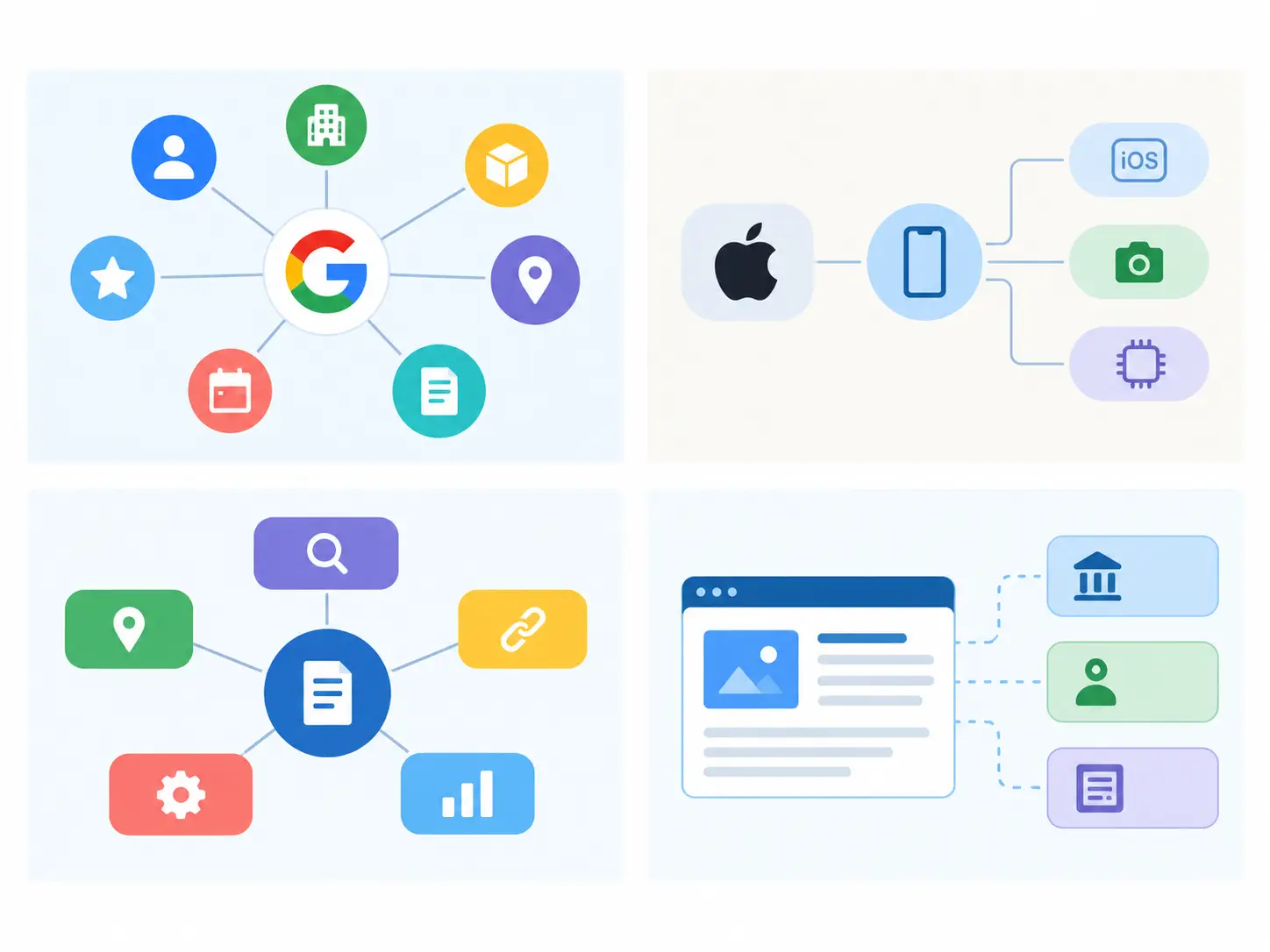
These connections provide context and help Google understand what users mean, even when they don’t use an exact keyword.
Why Are Entities Important for SEO?
Entities help search engines understand the subject and context of your content.
Instead of seeing a page as a collection of keywords, search engines can identify the people, products, brands, concepts, and topics discussed on the page.
Entities and Semantic Search
Semantic search focuses on understanding the meaning behind a query.
For example:
- “best places to visit in Paris”
- “Paris attractions for first-time visitors”
These searches use different words but have a similar information need.
Entities and the Knowledge Graph
Google’s Knowledge Graph helps connect entities and their relationships.
For example:
Neil Patel → Person → SEO → Digital Marketing → Content Marketing
When your website provides clear and consistent information about your brand, services, people, and topics, search engines can better understand these relationships.
The goal isn’t to force your website into the Knowledge Graph. Instead, provide accurate, structured, and consistent information.
Entities and AI Search
Entities are increasingly important as AI-powered search grows.
AI systems need to understand relationships between concepts to provide useful answers. They don’t simply look for one exact keyword.
For example, an SEO agency can naturally discuss entities such as local SEO, technical SEO, keyword research, link building, and Google Search Console.
This creates a clearer picture of its expertise and the topics it covers.
Entities and Topical Authority
Topical authority comes from demonstrating strong knowledge of a subject.
A website covering keyword research, technical SEO, local SEO, link building, and content optimization provides more context than one page targeting the word “SEO.”
Connecting relevant entities across these pages can strengthen the website\’s overall topical relevance.
Examples of Entities in SEO
Entities can appear in almost every type of content.
People, Brands, Products, and Organizations
Examples include:
- Microsoft
- Nike
- iPhone
- Tesla
- Elon Musk
- Harvard University
Each has its own attributes and relationships.
For example, iPhone is connected with Apple, smartphones, iOS, cameras, apps, and other related concepts.
Places, Events, and Concepts
Entities can also include:
- Pakistan
- New York City
- Eiffel Tower
- Olympic Games
- Black Friday
- Search Engine Optimization
- Artificial Intelligence
Concepts are especially useful in informational content because they help search engines understand the subject being discussed.
Entity Attributes and Relationships
Attributes describe an entity, while relationships explain how entities connect.
For example:
Entity: iPhone
Brand: Apple
Category: Smartphone
Operating System: iOS
Instead of simply mentioning an entity, explain its relevant characteristics and connections to other entities.
How to Identify Entities in Your Content
Start with your main topic and identify the people, brands, products, locations, concepts, and supporting topics related to it.
Ask:
- What entities are central to this topic?
- What related entities would users expect?
- Which entities appear in relevant search results?
- What concepts help explain the main subject?
Entity Recognition
Entity recognition identifies entities within text.
For example:
“Google uses the Knowledge Graph to improve search understanding.”
The key entities include Google and Knowledge Graph.
Entity analysis tools can help you discover which entities are already present and which relevant ones may be missing.
Entity Linking
Entity linking connects a mention in content to the specific entity it represents.
For example, when a page mentions Apple, search engines need to determine whether it means Apple Inc. or the fruit.
Clear context, related terms, internal links, and structured data can help reduce this ambiguity.
Analyze Search Results and Related Entities
Search your main topic and review:
- People Also Ask
- Knowledge Panels
- Related searches
- Related topics
- Competitor content
- Frequently mentioned concepts
Use these insights to find genuinely relevant entities rather than simply copying competitors.
How to Optimize Your Website for Entities
Entity optimization isn’t about repeating entity names. It’s about creating clear connections between your business, content, and relevant topics.
Map Your Core Entities
Identify your:
- Brand
- Products
- Services
- Locations
- Main topics
- Supporting topics
- Key people
Then make sure these entities are clearly represented on relevant pages.
Build Topic Clusters
Create a pillar page around a broad topic and supporting pages around related subtopics as part of an SEO content marketing strategy.
For example, an SEO website could have an SEO pillar page supported by content about local SEO, technical SEO, keyword research, link building, and on-page SEO.
This creates deeper coverage of the topic.

Use Internal Linking
Internal links connect related content and help search engines understand how your pages relate.
A local SEO article, for example, can link to content about Google Business Profile, local citations, keyword research, and technical SEO.
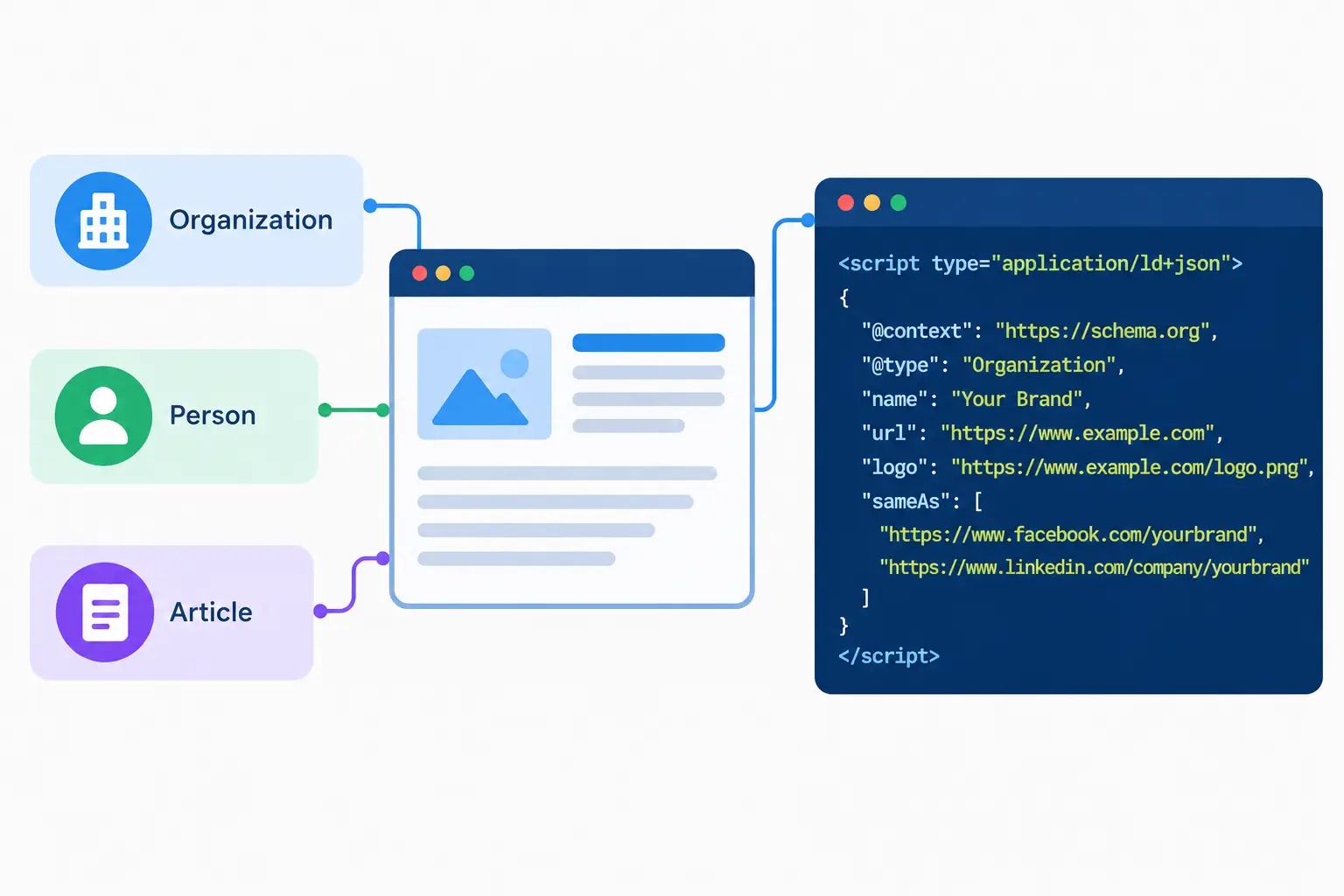
Add Schema Markup
Schema markup provides structured information about your content and entities.
Relevant schema types can include:
- Organization
- Person
- Product
- Article
- LocalBusiness
- Breadcrumb
Schema helps search engines interpret important information more clearly.
Connect Related Entities
Don’t treat entities as isolated items.
If you’re writing about local SEO, naturally discuss related entities such as Google Business Profile, reviews, citations, NAP consistency, local rankings, and search intent.
These relationships provide stronger context around your main topic.
Maintain Consistent Entity Information
Keep your business name, address, phone number, services, and other important details consistent across your website and online platforms.
Consistent information helps search engines understand that different mentions refer to the same business.
Strengthen Your Brand Entity
Clearly establish your brand through your homepage, About page, Organization schema, author information, social profiles, and relevant business listings.
Consistent information helps search engines build a clearer picture of your brand and expertise.
Entity SEO Best Practices
Follow these practices:
- Focus on meaning instead of keyword repetition.
- Use relevant entities naturally.
- Explain relationships between important entities.
- Build comprehensive topic clusters.
- Use useful internal links.
- Add relevant schema markup.
- Keep business information consistent.
- Write for search intent first.
- Use accurate and trustworthy information.
Common Entity SEO Mistakes to Avoid
Entity stuffing: Repeating entity names unnaturally can make content difficult to read.
Irrelevant entities: Adding unrelated brands, people, or concepts doesn\’t improve relevance.
Inconsistent information: Different business names or details across platforms can create confusion.
Focusing only on entities: Entity optimization doesn\’t replace technical SEO, quality content, links, search intent, or user experience.
Entities should support your SEO strategy, not replace it.
How to Measure Entity SEO
There isn’t one metric for entity SEO. Instead, monitor signals such as:
- Organic rankings
- Non-branded search traffic
- Visibility for related queries
- Google Search Console impressions and clicks
- Brand search visibility
- Topic cluster performance
- AI search visibility
The bigger question is whether search engines increasingly understand your brand, expertise, and relationship with specific topics.
The Future of Entity SEO and AI Search
Search is becoming increasingly focused on meaning, context, relationships, and user intent.
As AI-powered search grows, entities will become even more useful for businesses that want their content to be understood and referenced.
Keywords still matter, but modern SEO is no longer about repeating one phrase throughout a page.
A stronger approach is to understand the topic, identify relevant entities, explain their relationships, satisfy search intent, and create a website structure that is easy for search engines to understand.
In simple terms:
Keywords tell search engines what people type. Entities help explain what those words mean.
Frequently Asked Questions
1. What is an entity in SEO?
An entity is a unique and identifiable person, place, brand, product, organization, or concept. Search engines use entities to understand the meaning and context behind content.
2. Why are entities important for SEO?
Entities help search engines understand topics, relationships, and search intent. Optimizing for entities can improve semantic relevance, topical authority, and visibility in modern search results.
3. What is the difference between an entity and a keyword?
A keyword is a word or phrase people type into search engines. An entity represents the actual person, place, product, brand, or concept behind that term. Entities provide search engines with deeper context.
4. How do search engines identify entities?
Search engines identify entities by analyzing content, context, relationships, structured data, and information from trusted knowledge bases. This helps them distinguish between entities with similar names or meanings.
5. How can I optimize my website for entities?
Map your core entities, create comprehensive topic clusters, use internal links, add relevant schema markup, maintain consistent business information, and connect related entities throughout your content.