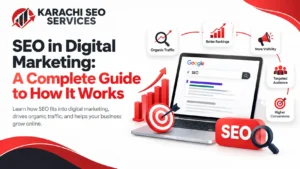
Search Engine Optimization (SEO) is the process of improving a website so that it has a better chance of appearing in unpaid search engine results. Within digital marketing, SEO helps businesses attract people who are actively looking for relevant products, services, or information while building a stronger online presence.
SEO covers several areas of a website, including content, technical performance, site structure, and external authority. When these areas are optimized effectively, search engines can understand the purpose of a website’s pages and match them with relevant search queries.
Why Is SEO Important for Digital Marketing?
SEO allows businesses to reach potential customers at the moment they are searching for something related to their products or services.
For instance, a person searching for “best digital marketing agency” may discover an agency through organic search if its website provides relevant and well-optimized information. Businesses targeting customers in particular locations can also use local SEO services to improve their presence in location-specific searches.
One major advantage of SEO is that businesses do not have to pay for every organic visitor. Instead, SEO aims to build search visibility that can continue bringing traffic over the long term.

Does SEO Fall Under Digital Marketing?
Yes. SEO is one of the core components of digital marketing.
Digital marketing includes a range of online strategies such as search engine optimization, paid advertising, social media, content marketing, email marketing, and more. SEO differs from paid advertising because its primary purpose is to improve a website’s visibility within organic search results.
SEO can also support other marketing activities. For example, well-optimized content can bring visitors to a website and guide them toward service pages, product pages, contact forms, or other conversion-focused areas.
For online stores, ecommerce SEO services can help improve the visibility of product pages, category pages, and other important ecommerce content.
How Does Search Engine Optimization Work?
SEO helps search engines find website pages, understand their content, and decide how relevant those pages are for particular searches.
This process can generally be understood through three key stages: crawling, indexing, and ranking.
Crawling: How Search Engines Discover Pages
Crawling happens when search engine bots visit websites to discover and examine pages.
These automated programs, often called crawlers or spiders, follow links from one page to another. Search engines can also discover URLs through XML sitemaps and other available sources.
While crawling a website, search engines gather information about its pages, content, links, and overall structure.
Indexing: How Search Engines Store Information
Once a page has been crawled, the search engine analyzes the information found on it.
If the page meets the search engine’s requirements, its information may be added to the search index. This index acts as a large collection of web page information that search engines can use when responding to user searches.
Not every crawled page is necessarily indexed. Pages with duplicate, very limited, or poor-quality content may not be selected for inclusion.
Ranking: How Search Results Are Ordered
When someone performs a search, the search engine reviews relevant pages within its index.
Its automated systems use numerous signals to determine which pages are most useful and relevant to the searcher’s query. The selected pages are then presented in the Search Engine Results Pages, commonly known as SERPs.

What Benefits Does SEO Provide?
Including SEO in a digital marketing strategy can help businesses achieve several important objectives, such as:
- Increasing organic website visitors
- Improving search engine visibility
- Reaching users with relevant search intent
- Strengthening brand awareness and credibility
- Generating leads and sales opportunities
- Supporting long-term digital growth
However, successful SEO is not simply about getting as many visitors as possible. The goal is to attract people who are genuinely interested in the business and what it provides.
Companies looking to reach customers throughout a country can also use a focused national SEO strategy to increase visibility beyond a single local market.
What Are the Main Areas of SEO?
SEO involves multiple disciplines, and each one focuses on a different aspect of improving a website’s search performance.
On-Page Optimization
On-page SEO deals with the elements found directly on website pages.
This may include page titles, headings, keywords, URLs, meta descriptions, written content, images, and internal links. Proper optimization helps visitors and search engines understand what each page is about.
Off-Page Optimization
Off-page SEO refers to activities that take place away from your own website.
Link building is a major part of this area. Relevant and reputable backlinks can help demonstrate that a website is trustworthy and authoritative within its subject area.
Technical Optimization
Technical SEO focuses on the underlying technical aspects of a website.
It may involve improving crawlability, mobile performance, loading speed, redirects, broken links, XML sitemaps, canonical URLs, and structured data.
A strong technical foundation allows search engines to access and interpret website content more efficiently.
Local Search Optimization
Local SEO is designed for businesses that want to appear for searches associated with a specific geographical area.
It can be particularly valuable for companies serving particular cities, regions, or communities. A well-planned local SEO strategy can help businesses connect with customers searching for nearby products and services.
What Factors Does Google Consider When Ranking Pages?
Google uses automated systems that evaluate many different signals when deciding which pages should appear for a particular query.
There is no single optimization technique that guarantees a top position. Instead, rankings can be influenced by several aspects of a website and its content.

Relevant and Helpful Content
Content should satisfy the reason behind a user’s search.
Rather than producing articles simply to insert keywords, websites should provide accurate, useful, and relevant information that answers the user’s questions or helps them solve a problem.
Website Experience and Core Web Vitals
The experience visitors receive on a website also matters.
A website should load efficiently, function correctly on mobile devices, provide clear navigation, and avoid unexpected layout movement. Core Web Vitals measure important aspects of page experience, including Largest Contentful Paint (LCP) and Cumulative Layout Shift (CLS).
E-E-A-T and Trust
E-E-A-T refers to Experience, Expertise, Authoritativeness, and Trustworthiness.
Websites can demonstrate these qualities by providing accurate information, showing relevant knowledge and experience, maintaining trustworthy practices, and creating content that users can rely on.
How Can You Include SEO in a Digital Marketing Plan?
SEO should be approached as an ongoing process rather than a one-time website task.
Identify Keywords and Understand Search Intent
Begin by researching the phrases your potential customers use when searching online.
Keyword research should consider more than monthly search volume. You also need to understand what users expect to find when they enter a particular query. This allows you to create pages that better match their needs.
Publish Helpful and Optimized Content
Create original content that provides genuine value to your target audience.
Important elements such as titles, headings, URLs, meta descriptions, images, and page copy should be optimized appropriately. Keywords should be included naturally without making the content difficult to read.
Improve the Technical Foundation
Regularly check your website for technical problems that could affect search visibility.
Important areas include crawlability, mobile usability, page speed, broken links, duplicate content, redirects, and other indexing or technical issues.
Build Internal Links and Quality Backlinks
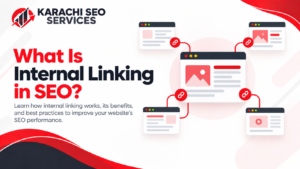
Internal linking connects related pages and makes it easier for users to explore your website. It also helps search engines understand how different pages relate to one another.
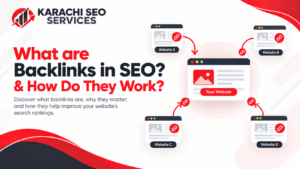
External backlinks can contribute to website authority when they come from relevant and trustworthy sources. Quality is generally more valuable than simply trying to obtain a high number of links.
For websites built with Shopify, specialized Shopify SEO services can help address the platform’s specific SEO and ecommerce requirements.
Measure Performance and Make Improvements
SEO performance should be monitored regularly because search trends, competitors, algorithms, and websites can all change.
Useful metrics include organic traffic, rankings, clicks, impressions, and conversions. Google Search Console can also provide valuable information about search performance and technical problems.
Businesses and agencies managing SEO campaigns for multiple clients may also use reseller SEO services to support campaign delivery and management.
How Is Artificial Intelligence Changing SEO?
Artificial intelligence is influencing both search engines and the way users find information online.
Search engines increasingly use AI systems to understand the meaning behind queries, evaluate content, and provide more direct answers. Google’s AI-powered search features are also changing how information can be presented alongside traditional organic results.
As these developments continue, businesses should concentrate on publishing original, accurate, useful, and trustworthy content. Understanding search intent, demonstrating genuine expertise, keeping information updated, and maintaining a positive website experience are increasingly important for SEO.
Final Thoughts
SEO is a major part of digital marketing because it helps businesses gain visibility in organic search and connect with people who are actively looking for relevant information, products, or services.
The basic search process involves crawling, indexing, and ranking, but effective SEO goes beyond these stages. Quality content, technical performance, user experience, website authority, and trust all contribute to a strong SEO strategy.
When SEO is integrated with other digital marketing channels, businesses can attract more relevant visitors, strengthen their online presence, and create opportunities for sustainable leads and sales.
Frequently Asked Questions
What does SEO mean in digital marketing?
SEO means improving a website so that it can gain more visibility in organic search engine results. It helps businesses attract relevant users from platforms such as Google and Bing without paying for every individual click.
What are the steps involved in SEO?
The search process can be broadly divided into crawling, indexing, and ranking. Search engines first discover pages, then analyze and store their information, and finally determine which pages are most relevant to a user’s search.
How does SEO support digital marketing?
SEO helps improve organic visibility, bring targeted visitors to a website, establish authority, and support business goals such as lead generation and sales. It can be combined with PPC, social media, content marketing, and other digital strategies.
Is it possible to do SEO yourself?
Yes. Website owners can handle many basic SEO tasks themselves, including keyword research, content creation, page optimization, internal linking, technical checks, and performance monitoring through tools such as Google Search Console.
For competitive markets or technically complex websites, working with an experienced SEO professional or agency may provide additional benefits.
Is SEO one of the digital marketing channels?
Yes. SEO is a major digital marketing channel. Other common channels include PPC, social media marketing, email marketing, content marketing, and online advertising.
What makes SEO valuable for digital marketing?
SEO can help businesses build organic search visibility, reach users with relevant intent, attract qualified website traffic, establish credibility, and generate long-term opportunities for leads and revenue.